3 Trust Signals Clinicians Use to Vet Medical Grade Skincare

Medical grade skincare means products formulated with clinically significant concentrations of active ingredients, tested for stability and purity, and typically sold through licensed practitioners rather than open retail. It benefits people dealing with stubborn photoageing, melasma, acne that shrugs off drugstore treatments, or anyone recovering from a laser or injectable procedure. The practical next step is simple: check for real clinical evidence behind the claim, and talk to a clinician before adding potent actives to your routine.
TL;DR:
Medical-grade skincare relies on clinical evidence, transparent ingredient concentrations, and practitioner accountability, not just marketing labels.
Over-the-counter products typically contain lower active ingredient concentrations and lack delivery systems designed for tissue changes.
In-clinic products undergo rigorous testing and are prescribed based on personalized assessments to ensure safety and efficacy.
Using potent actives safely requires patch testing, gradual introduction, barrier protection, and strict sun protection, especially after procedures.
A professional consultation ensures correct concentration, timing, and sequencing tailored to your skin and treatment goals, improving long-term results.
Table of Contents
How medical-grade skincare differs from over-the-counter products
How to evaluate medical-grade skincare products and providers
Which active ingredients matter, and what’s the evidence behind them
What a practitioner-led clinic wants you to understand about home care
Book a consultation to build a skincare plan that fits your skin
What “medical grade” actually means (labels vs. reality)
Here’s the part most shoppers never learn: “medical grade” is not a regulated term. No government agency defines it, licenses it, or audits brands for compliance. A company can print it on a bottle of moisturizer with the same active ingredient concentration as a drugstore product, and nothing stops them.
So what separates the real thing from marketing? Accountability. The meaningful standard is clinical evidence, transparent therapeutic concentrations, and practitioner accountability rather than a legal label. When a licensed provider stands behind a recommendation, misuse risk drops because the regimen gets personalized to your skin, your history, and whatever procedure you just had done.
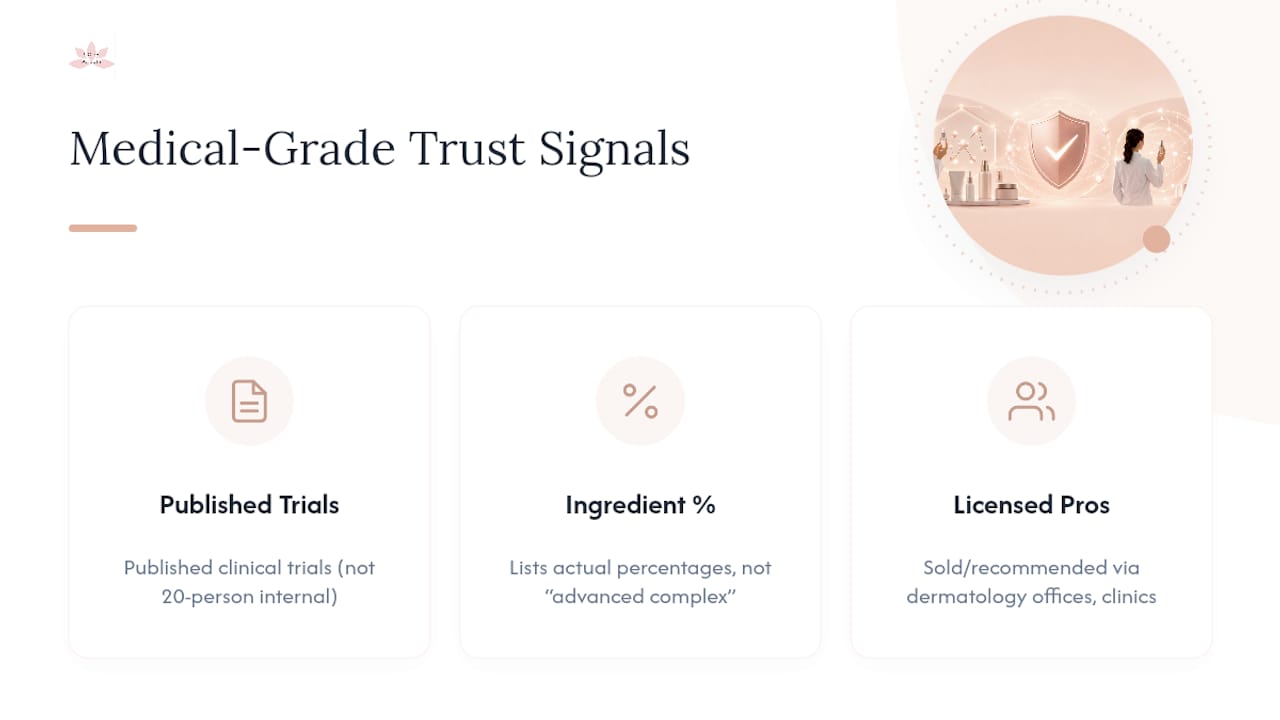
Look for three trust signals before you believe the hype: published clinical trials (not just an internal “consumer study” of 20 people), ingredient labels that state actual percentages instead of vague terms like “advanced complex,” and distribution through medical spas, dermatology offices, or nurse-led clinics rather than big-box retail. Medical-grade products are typically distributed through or recommended by licensed professionals, which is one of the few consistent markers across the category. A brand claiming “clinically proven to reduce fine lines” should be able to point you to the actual study, not just a testimonial page.
How medical-grade skincare differs from over-the-counter products
The gap comes down to concentration and delivery, not marketing budget. Over-the-counter serums often use active ingredients at cosmetic strength, enough to sit on a shelf legally and feel nice on skin, but not always enough to change tissue at a measurable level. Medical-grade formulas push those concentrations higher and often pair them with delivery systems designed to get past the skin’s surface barrier instead of evaporating on contact.
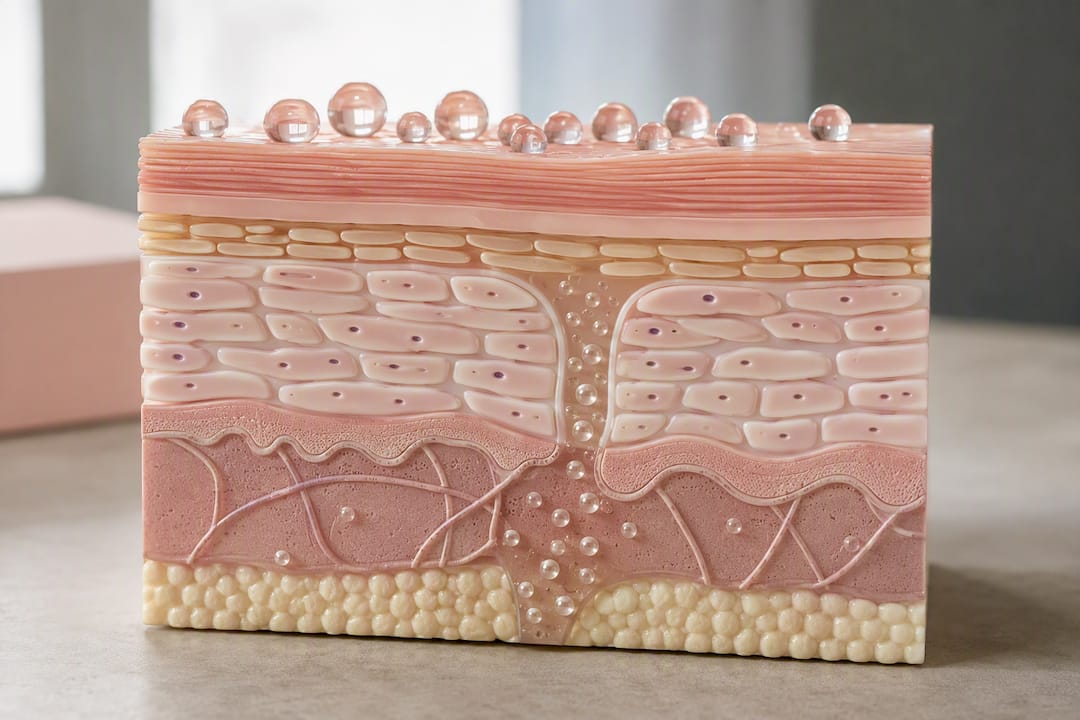
That difference shows up in testing, too. Reputable clinical lines undergo stability testing (does the formula still work after six months in a bathroom cabinet?) and purity testing, backed by data rather than a marketing department’s confidence. Medical-grade skincare undergoes rigorous clinical testing to ensure purity, stability, and measurable efficacy for concerns like aging, pigmentation, and acne.
Timelines matter, too. Over-the-counter products might promise glow in a week; professional-strength retinoids and vitamin C formulations usually need 8 to 12 weeks of consistent use before you see real change, and clinics commonly recommend them for patients managing melasma, active acne, or post-procedure skin repair over a period of weeks.
How to evaluate medical-grade skincare products and providers
Not every product sold at a clinic counter deserves the price tag. Before you buy, run it through a short mental checklist.
Clinical evidence: Ask what the study actually measured, whether it tracked wrinkle depth, pigmentation score, or barrier function, and whether an independent lab or the brand itself ran it.
Ingredient transparency: A trustworthy label states the percentage of the active ingredient, not just its name buried in a 30-item list.
Professional distribution and rationale: If a nurse practitioner or dermatologist recommends a product, ask why this one, at this strength, for your skin specifically.
Formula stability: Airless pump packaging protects sensitive actives like vitamin C and retinol from oxidizing; a jar you dip your fingers into daily does not.
Price and supply channel: A high price or clinic-only availability suggests quality but is not a guarantee on its own. Treat it as one data point, not the whole picture.
Pro Tip: Ask your provider for the ingredient concentration in writing before you buy, then check whether that number matches published research on PubMed Central, which archives millions of peer-reviewed biomedical articles. If the concentration in the study is nowhere close to what’s in the bottle, the claim on the label is doing more work than the formula.
Which active ingredients matter, and what’s the evidence behind them
Product labels throw around a lot of chemistry. Here’s what actually moves the needle, and how brands back their claims.
Antioxidants (vitamin C formulations): Stabilized L-ascorbic acid protects against environmental damage, but it’s notoriously unstable and delivery matters as much as concentration. SkinCeuticals’ C E Ferulic has clinical data cited by the brand claiming measurable antioxidant protection and improvements in ageing markers, which is the kind of brand-specific evidence worth asking about directly.
Retinoids and retinol systems: Prescription-strength cretinoid and clinical retinol both drive cell turnover, but potency differences mean a jump from 0.25% to 1% retinol is not a small step. This is where “retinization,” the skin’s adjustment period, becomes relevant.
Peptides: Marketed for firmness and collagen support, with claimed benefits that vary widely by peptide type and delivery vehicle.
Ceramides and lipid-rich formulations: The 2:4:2 ratio concept (specific ceramide to cholesterol to fatty acid ratios) shows up in barrier repair creams, designed to pair with retinoids rather than fight them.
Acids and exfoliants: Glycolic, salicylic, and lactic acids work at different concentrations for different goals, and layering too many at once is a fast way to compromise your barrier.
A useful real-world example: Triple Lipid Restore 2:4:2 is clinically presented as improving skin smoothness, radiance, and barrier recovery, and barrier creams like it are commonly recommended to shorten the adjustment period when someone starts a retinoid for the first time.
How medical-grade home care supports in-clinic treatments
Clinics don’t hand out home-care recommendations as an upsell. They do it because a laser or injectable result holds up better, and heals faster, when the skin gets the right support afterward. Home products are most effective when prescribed as part of pre- and post-procedure protocols rather than picked up separately at random.
A few concrete patterns show up across practices:
Antioxidant serums applied after laser treatments help defend newly resurfaced skin against environmental stress during healing.
Barrier creams get introduced alongside a new retinoid specifically to reduce dryness and flaking during the adjustment phase.
Timing windows matter: some active treatments get paused entirely for a set period after ablative procedures like CO2 resurfacing, and that window depends on how invasive the procedure was and how irritating the product is, which is exactly why a clinician should set the exact timing rather than a product label.
Specific clinician-recommended creams can amplify in-office treatment outcomes, which is part of why clinics bundle home-care advice with procedures like microneedling rather than leaving patients to guess.
A Nurse Practitioner-led consultation is where concentration and sequencing actually get personalized, rather than applied as a generic checklist. Bloom Society’s pre and post-procedure guidelines reflect this kind of tailored approach, adjusting timing based on what treatment you had and how your skin responds.
Pro Tip: If you’re booking microneedling, ask your provider exactly when to resume retinoid use afterward. Restarting too early is one of the more common causes of post-procedure irritation.
How to introduce potent actives safely
Jumping straight to nightly retinoid use, or stacking three acids in one routine, is how most at-home irritation happens. A staged approach works better.
Patch test first. Apply a small amount behind the ear or on the inner forearm for two nights before using it on your face.
Start low and slow. Begin retinoids at two nights a week, not seven, and increase frequency only once your skin tolerates it without peeling.
Use the sandwich method. Hydrating serum, then a small dose of retinoid, then a barrier cream reduces irritation and speeds up adaptation during retinization.
Wear sunscreen daily, no exceptions. Retinoids and exfoliating acids both increase sun sensitivity; skipping SPF undoes the benefit and increases pigmentation risk.
Watch for red flags. Persistent redness, skin that looks raw or erodes, or any sign of infection means stop the product and consult a professional rather than pushing through.
The most common mistakes are predictable: mixing a strong acid with a retinoid on the same night, exfoliating daily “to speed things up,” and skipping barrier repair because it feels like an unnecessary extra step. None of these save time. All of them tend to set your skin back further than starting slowly would have.
What a practitioner-led clinic wants you to understand about home care
Most people treat medical-grade products as a shortcut, buy the serum, skip the consultation, hope for the best. That’s backwards. The formula only performs as well as the plan around it, and the plan is where a Nurse Practitioner-led model earns its keep: matching concentration and sequencing to your actual skin rather than a generic label recommendation.
Durable results come from consistency, not a single purchase. A retinoid works because you use it for months, adjusted as your skin changes, alongside periodic in-clinic assessment that catches problems before they become setbacks. If your skin concern is complex, persistent, or tied to a recent procedure, professional assessment isn’t overkill. It’s the difference between guessing and actually knowing what your skin needs.
— Aida
Book a consultation to build a skincare plan that fits your skin
Most medical-grade products get sold the same way drugstore products do: pick a bottle, hope it works, adjust later if it doesn’t. Bloom Society takes a different approach. A Nurse Practitioner-led consultation determines the right concentration, sequencing, and timing for your skin before you spend a dollar on product, so you’re not guessing your way through retinization or layering acids that fight each other.

That assessment matters even more around procedures. If you’re considering microneedling or a CO2 laser treatment, your home-care plan gets built around the healing timeline, not against it, and adjusted at follow-up so your skin keeps improving instead of stalling. The same personalized logic applies to injectables like Botox, dermal fillers, and skin boosters, where the right aftercare protocol protects your results. Some patients also pair their skincare plan with hydration support through partners like Vitaluxe Drip Lounge, or reduce nighttime friction on treated skin with something as simple as a silk pillowcase.
Book a consultation online to get a regimen built around your skin, not a shelf label.
Sources
FAQ
What is the best medical grade skincare brand?
There’s no single “best” brand; the right choice depends on your skin concern, the concentration you need, and whether a clinician is involved in prescribing it. Brands like SkinCeuticals publish clinical data behind specific products, which is a stronger signal than reputation alone.
What is the best medical skincare for acne or ageing?
For acne, clinical-strength retinoids and salicylic acid formulations backed by practitioner guidance tend to outperform over-the-counter options. For ageing, stabilized vitamin C paired with a retinoid and a barrier-repair cream is a common, evidence-supported combination, though the right strength depends on your skin’s tolerance.
What is considered medical grade skin care?
Medical grade skin care generally means higher-concentration active ingredients, clinical testing for stability and efficacy, and distribution through licensed professionals rather than general retail. The term itself isn’t government-regulated, so the products’ clinical evidence and the practitioner behind the recommendation matter more than the label.
Are there Canadian options for medical-grade skincare?
Yes. Canadian medical aesthetics clinics, including nurse-led practices, commonly carry clinical lines and pair them with in-office procedures like laser treatments or injectables. Bloom Society, based in Windsor–Essex, offers consultations that assess your skin and recommend product strength and sequencing alongside relevant in-clinic services.
How much does a skincare consultation cost at a medical aesthetics clinic?
Pricing for consultations and specific treatments varies by service, and current details are available on Bloom Society’s booking page. Some related treatments, like the Hollywood Carbon Laser Facial, are listed starting at $300 for reference.
Recommended
Comments